
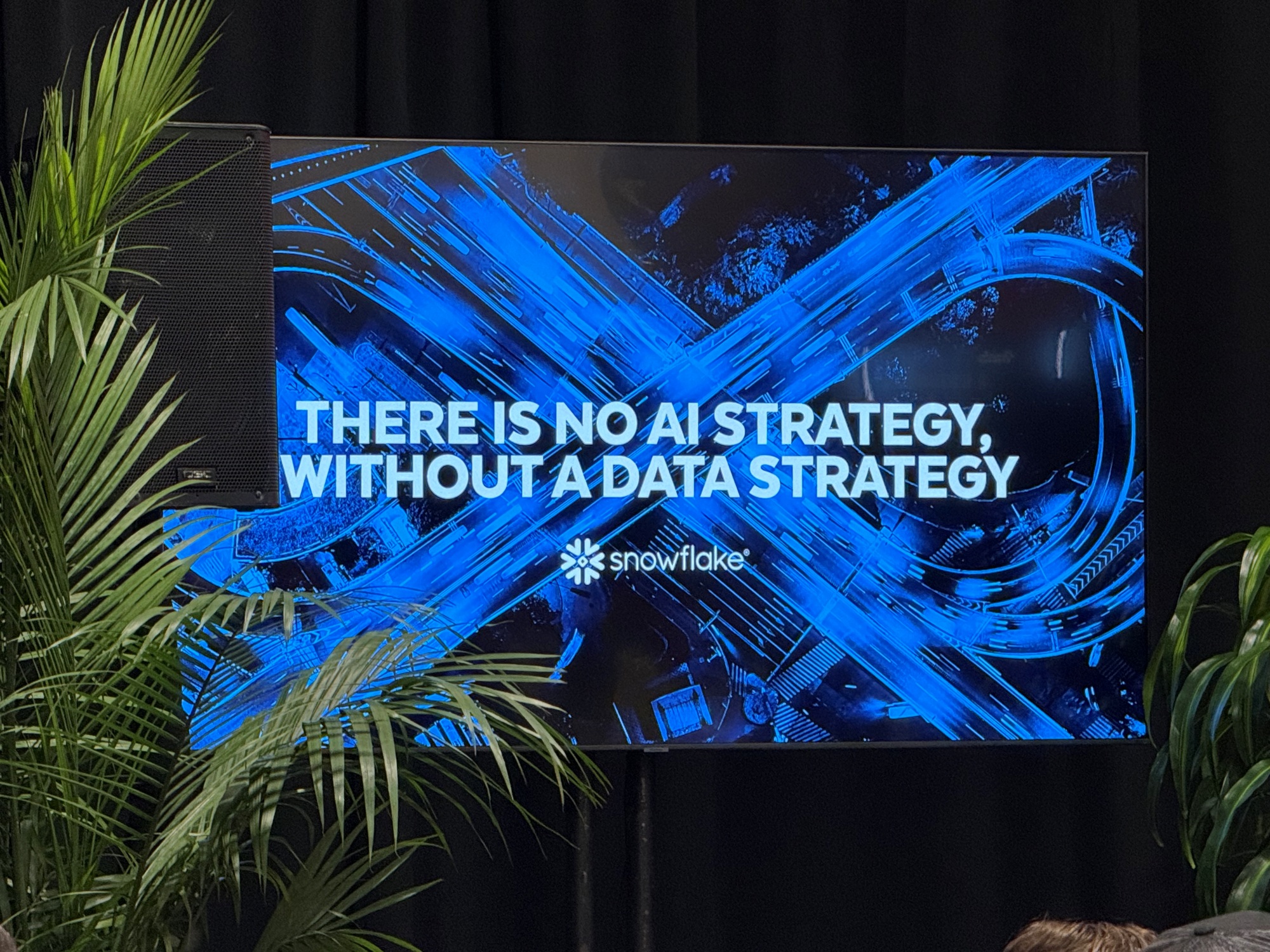
There was no shortage of content about AI at the AHLA Hospitality Show in October 2025, but the Snowflake presentation by Whitnee Hawthorne shared some good information.
Across the hospitality industry, the conditions for transformation have never been clearer:
Data + AI = Business Transformation
Snowflake’s core message stood out: hotels are still spending more than necessary to acquire guests because they are operating on assumptions rather than intelligence. To remain competitive, hospitality organizations must evolve into fully data-driven businesses.
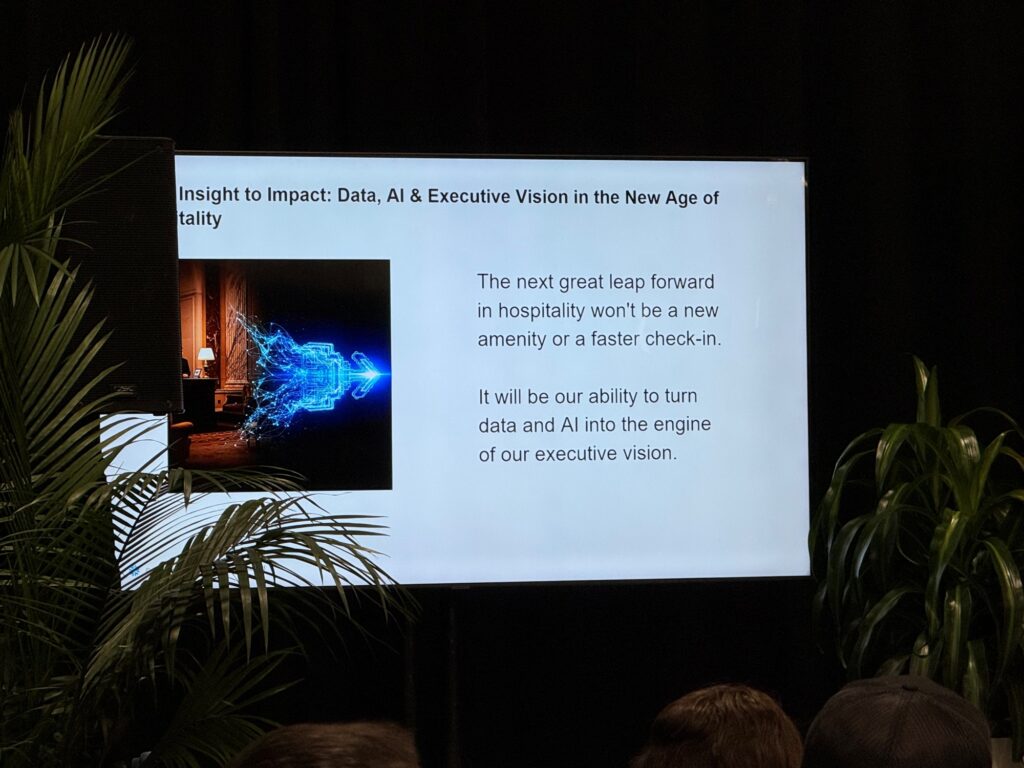
Why Hotel Acquisition Costs Are Still Too High
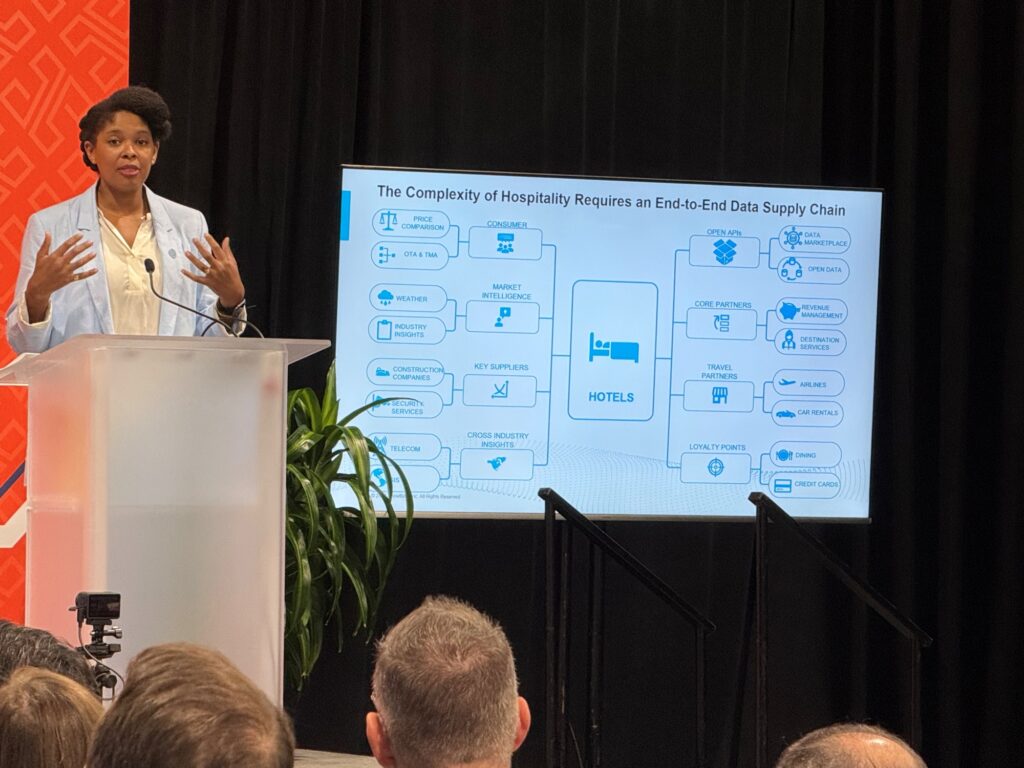
Hotels hold massive volumes of valuable data, but that insight remains trapped in disconnected systems:
- PMS
- GRS
- CRM
- Website analytics
- Paid media platforms
- Channel data
- Ancillary revenue systems like spa, restaurants, and activities.
When teams can’t see the full picture, commercial strategies rely on historical patterns and intuition.
A unified data approach, already adopted by global brands including Marriott, Vail Resorts, and Accor, empowers hotels to improve targeting, optimize distribution, shape media investment decisions, and activate cross-sell opportunities that improve total revenue per guest.
When data connects seamlessly, profitability improves.
Understanding Who Guests Are Beyond Their Stay
Knowing a guest is no longer limited to knowing their room type or loyalty status. To maximize value, hotels must understand what influences their choices before arrival, throughout the destination experience, and after departure.
For example, hotels can now leverage real-time external signals including flight activity and delays, major local events and concerts, festival calendars, weather forecasts, or surging interest in local attractions. Partners such as PredictHQ provide these predictive demand insights so hotels can anticipate guest needs and market conditions rather than simply react to them.
This marks the shift from reacting to demand into predicting and shaping it.
The New Hospitality: Connected, Collaborative, AI-Powered
Snowflake outlined the key components driving the future:
- Data collaboration creates a complete picture of commercial performance by combining room revenue and ancillary spend into a single understanding of guest value.
- Employee-facing AI enhances efficiency and performance by guiding operational decisions and improving response times at every touchpoint.
- Dynamic pricing finally reflects real-time demand conditions instead of historical averages.
- Personalization becomes actionable. Instead of guessing whether a traveler is on business, leisure, or blended travel, hotels can know and respond accordingly.
- Retrieval-Augmented Generation ensures AI-generated recommendations are grounded in accurate, trusted data as adoption scales throughout organizations.
Examples of Connecting the Guest Journey from End to End
A flight delay can be detected automatically and the hotel can adjust check-in operations accordingly.
A rainy forecast can shift promotional efforts toward indoor experiences.
Rapid ticket sales for a major concert can signal pricing opportunities hours or days earlier than legacy reporting allows.
These capabilities already exist today when the right data infrastructure is in place.
Leadership Determines the Pace of Transformation
Technology is no longer the obstacle. The biggest barrier is culture.
Hospitality leaders must shift how they think, what skills they foster across teams, and the tools they empower employees to use. The mindset must move away from preserving the status quo and toward re-imagining what commercial strategy could achieve if it were designed for the future rather than inherited from the past.
The most successful organizations are embracing augmentation. Human talent remains the driver of hospitality excellence, but AI enhances speed, precision, and confidence in every decision.
Where the Industry Goes Next
Hospitality has always excelled at delivering exceptional experiences on property. Now, data and AI enable hotels to extend that excellence throughout the entire traveler journey.
The future is not about collecting more data; it is about connecting what already exists and activating it intelligently.